Another weekend, another round of protests here in Spain by the indignados, or “the outraged”, demanding an end to cuts and other austerity measures. I was taking a walk along the Gran Via yesterday when one troupe of demonstrators from Badalona came marching down the road, blocking traffic and shouting their uncoordinated, mismatched chants (for someone used to Korean demonstrations, Spanish protests are rather underwhelming).
But protest quality aside, what is most irksome is seeing how profoundly all involved in Spain — the pro-austerity crowd and the indignados — continue to miss the point.
On the one hand, cutting and slashing budgets in Spain (and much of Europe) are terribly bad macroeconomics. This budget was in surplus with a very small debt when the economic crisis happened, and austerity now in such a miserable economy only creates more problems than it is supposed to cure.
On the other hand, so much of Spain is still so horribly inefficient. Businesses have 20 people doing the work of four or five in, say, New York. One cultural organization I know here in Barcelona has 18 people employed in its tourism division — despite not offering any tours of its facilities or doing anything tourism-related. It’s crazy. The good years of 1996-2006 or so led to massive bureaucratic expansion, much of which is still in place.
So what solutions are politicians talking about? Instead of trying to figure out how to make the reforms that are needed to make Spain more efficient while creating projects that will help Spain in the long-term, we get arguments about Catalan independence. Instead of cutting the fat and adding to the efficient, we have institutions cutting the meat and protecting the fat.
So we will very soon be in a situation in which the four main parties in Spain—the ones represented in the Metroscopia survey—all have around or less than 20% support, within a political and constitutional system that is rotting away all by itself due to so much corruption, incapable of bringing about the institutional changes necessary to adapt Spain to a new century, and in which there is no realistic alternative anywhere on the horizon capable of governing the country.
Of course, with the European economy as a whole shrinking for six quarters in a row — worse than the initial crisis of 2008/9 — it’s not like the rest of the continent is doing much better. It’s a beautiful place, but I’m happy I’ll be moving on soon.
Barcelona — like much of Catalonia and Spain — is a great place to live and explore. There is so much wonderful architecture, nature, food, and other good stuff, it can be a real embarrassment of riches. However, that great stuff does attract a lot of tourists, and the most popular locations can be crazy busy. Park Guell, Montserrat, Tibidabo, the beaches, the old city center of Barcelona are all wonderful, but they can get a little overwhelming.
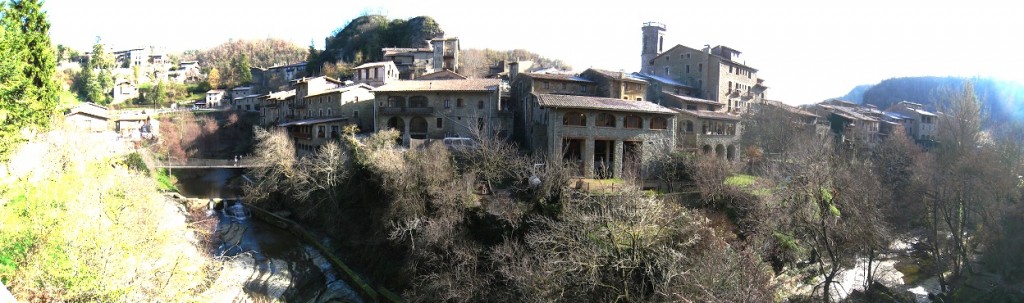
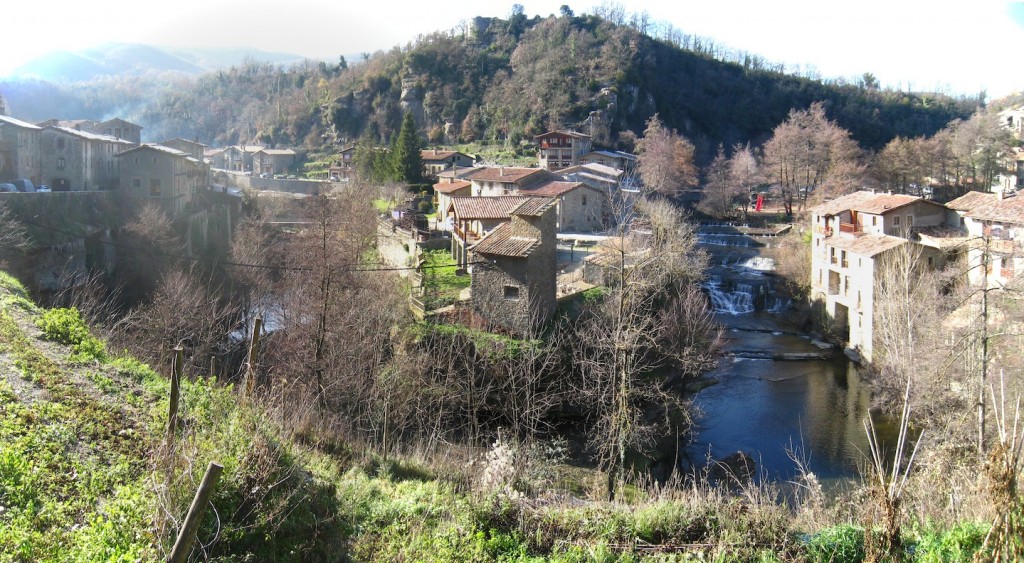
Which is why it is so much fun to discover wonderful locations that are not on the usual tourist map. Yesterday I made a trip out to the medieval Catalan village of Rupit, and really enjoyed it. High recommend, if you are coming to Spain and are looking for places to go.
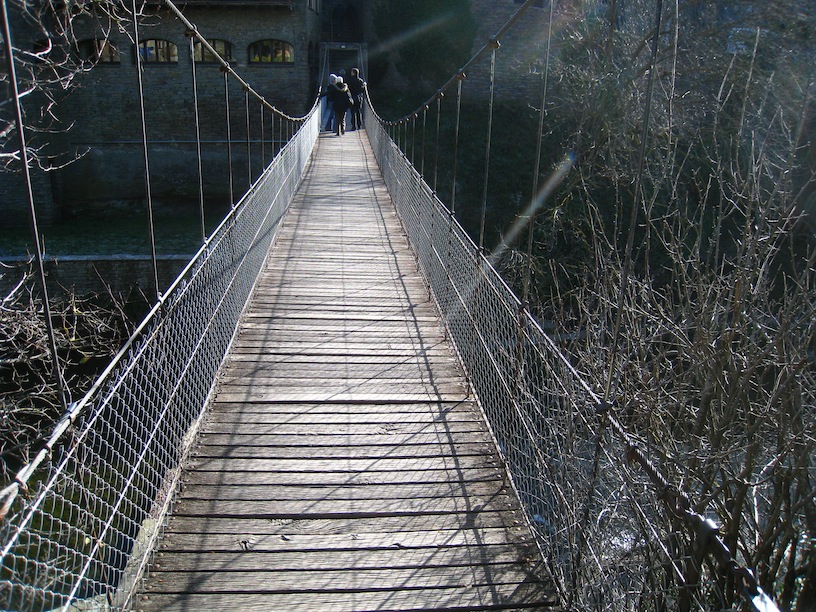
Rupit is located in a hidden river valley about 100 km north of Barcelona, not far from Vic, another lovely town in Catalonia. It has roots over 1,000 years old, was built up more in the 12th century, but most of the buildings there now are from the 17th century. The buildings are all stone, like something out of Lord of the Rings. The river is gorgeous, and there are plenty of great walks in the area.
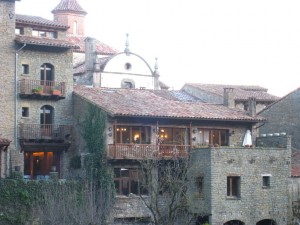
The food is pretty much all Catalan (lots of Catalan Butifara sausages), but quite good, and most of the restaurants have amazing views of the river and gorge. This is a pic of the restaurant where I had lunch, from the other side of the river.
So, Germany and the IMF are now openly talking about letting Greece default and kicking it out of the euro (even though there is no mechanism in place for removing a country from the euro and no one really knows what a default will do to the region).
And, with Spain’s 10-year bond rates climbing to nearly 7.5% this morning, clearly investors don’t believe that the latest bailout plan for Spain is going to work. Just as clearly, Mariano Rajoy has no clue what is going on or how to deal with the crisis. Spain’s whole approach seems to be: delay, deny, do nothing, and wait for things to get so bad that the Germans force you to do whatever; then, you can tell your citizens that it is not your fault all these bad things are happening, the Germans are making you do them. Good times.
As it happens, I’ve been having fun reading some old economics stuff lately — kind of like the angst a teenager gets from reading Romantic poetry, but for middled-aged people — and the big thing I have noticed is how familiar all this feels. Yet again, the political, the clueless, and the spiteful is trumping the economically sound. As JM Keynes said soon after the peace of WWI:
[...] the fundamental economic problems of a Europe starving and disintegrating before their eyes, was the one question in which it was impossible to arouse the interest of the Four. Reparation was their main excursion into the economic field, and they settled it as a problem of theology, of politics, of electoral chicane, from every point of view except that of the economic future of the States whose destiny they were handling.
UPDATE: Of course, Paul Krugman weighs in on Germany’s threat to let Greece leave the euro and makes some good points:
Once a country, any country, has demonstrated that the euro isn’t necessarily forever, investors — and ordinary bank depositors — in other countries are bound to take note. I’d be shocked if Greek exit isn’t followed by large bank withdrawals all around the European periphery.
- I’ve talked a few years ago about the end of the Dream Cinema, the last old-style, single-screen cinema left in Seoul. Well, after stumbling along on life support, Dream Cinema (aka Seodaemun Art Hall) finally screened its last movie yesterday, Bicycle Thief. Theater head Kim Eun-ju was apparently so upset, she shaved her head at the screening.
Dream Cinema opened in 1964 and for many years was one of the nicer theaters in Seoul. But that was quite a while ago, and it was terribly run down when I first went there in 1998-ish. Sad to see the theater go, but, still, considering it was supposed to close in 2007 or so, it had a pretty good run. Besides, who isn’t excited about a new high-rise hotel filling the Seoul skyline?
- Not only is North Korean leader Kim Jong-un apparently dating a famous singer and incorporating Disney characters into its stage performances, but now Kim is reportedly using the theme from Rocky, Sinatra’s “My Way”, and “It’s a Small World.” All that is, of course, in addition to the North Korean accordion version of “Take Me On”:
- Meanwhile, over here in Spain, the torpid Rajoy government seems intent on running down the struggling economy any way it can. Remind me again why Spain has to undergo this sort of pain when its debt-to-GDP ratio is lower than in Germany, France, the United States, or Japan? What a crock.
Edward Hugh has another great article on the state of the euro, the Spanish economy, and what the future might hold for the region. Key graph:
Whatever way you call the aid Spain is now receiving from Europe it is clear that this is the beginning and not the end of what is likely to be a long process, one which will now inexorably lead to either the creation of a United States of the Euro Area, or to failure and disintegration of the Euro. There will be no middle path, so the stakes are now very high for all involved. Unfortunately Europe’s leaders are still too busy thinking short term, and practicing one step at a time-ism.
Housing prices, after putting up a fight for a while, are really in freefall now, plunging 13% last year alone — that’s the fastest rate since the economic crisis began five years ago. And since the housing bubble is the key part of the crisis in Spain, the plunge in prices (down 30% from the peak and no bottom in sight) means at last real decisions will have to be made.
It’s still amazing to me, though, how little has changed in daily life for most people here, despite the massive amounts of pain the economy is going through.
George Soros has published a very good presentation on the state of the euro and what went wrong here. It is a bit dense in parts, but totally worth a read.
Like many analysts (at least the ones I like), he notes that the euro crisis is not a fiscal crisis as much as it is a problem with banks and balances of payments. But he adds a unique wrinkle I had not heard before, calling the euro crisis a political bubble, not a financial one.
The authorities did not even understand the nature of the problem, let alone see a solution. So they tried to buy time.
Usually that works. Financial panics subside and the authorities realize a profit on their intervention. But not this time because the financial problems were reinforced by a process of political disintegration. While the European Union was being created, the leadership was in the forefront of further integration; but after the outbreak of the financial crisis the authorities became wedded to preserving the status quo. This has forced all those who consider the status quo unsustainable or intolerable into an anti-European posture. That is the political dynamic that makes the disintegration of the European Union just as self-reinforcing as its creation has been. That is the political bubble I was talking about.
(Emphasis mine.)
Having read the whole Game of Thrones series recently, I cannot help but think of Rob Stark, who won every battle but could not win the war (not really a spoiler, since that is kind of the theme of the books). The economists really have won battles, showing that the euro as constructed was a bad idea, then once the euro crisis began, describing how serious it was and what was needed to stop it. But despite having the winning arguments, time and time again the politicians win the day with one half-baked agenda or another. There just is not the political will to do what needs to be done, in the United States, China, and especially in Europe.
Which, by the way, makes me ever more impressed with how Korea handled the Asian economic crisis of 1997-8. Korean families donating their gold to fight the crisis might not have been useful in any direct sense, but it did show a certain unity of spirit, enabling Korea’s politicians to do what needed to be done. Considering how divisive Korean politics usually is, it is amazing how much political will that country can generate when it needs to.
Anyhow, where does Soros think all this is going?
In my judgment the authorities have a three months’ window during which they could still correct their mistakes and reverse the current trends. By the authorities I mean mainly the German government and the Bundesbank because in a crisis the creditors are in the driver’s seat and nothing can be done without German support.
He think Europe needs to fix the immediate problems, to give itself some breathing space and pass new legislation/treaties required to fix the euro. But there is just three months to get things done, and so far there is no political will in Germany at all.
UPDATE: Right on cue, here’s Edward Hugh with a big dose of sunshine. And by “sunshine,” of course I mean incredibly depressing facts. “Global Growth Shutters Toward a Halt” at Fistful of Euros.
Always great to see Paul Krugman turning his eye to Spain, even if it is because the Euro crisis is spreading its way over here. As he succinctly says, Spain is no case of meltdown by excess spending: it was running a surplus in 2007 and its debt level was very low. What Spain did have, however, was a housing bubble–created in no small part by way too much cheap money from Germany.
I’m still amazed at how the PIGS countries are putting up with German-led nonsense about how to solve this crisis. Foolish Northern lending was as responsible for Europe’s current woes as anything, so it is not unreasonable to ask those responsible to bear a share of the pain of fixing the problem.
There is that old saying: If you owe the bank $1,000, the bank owns you; but if you owe the bank $1 million, you own the bank. If I were Spain–and Portugal, and perhaps Italy (but not Greece: they really are messed up with excessive spending–I would be pushing back. Sure, Spain pulling out of the euro would create havoc here, but it was be just as bad for the rest of Europe. The threat would go a long way to righting the balance between Europe’s north and south.
For more information about the Spanish economy, there is always the wonderful Edward Hugh. He has a new interview up here. I wonder what Mr. Hugh would make of Krugman’s suggestion that Germany should raise its inflation rate up to 4% or so, while the PIGS are kept at 1%-ish, to help re-balance the north and south of Europe.
La Vanguardia had a really interesting article a couple of days ago about immigration in Barcelona since 2000 (sorry, only in Spanish, as far as I know). Considering how international Barcelona feels today, it is kind of amazing to realize how recent a development that is. Today, there are about 282,000 foreigners living in Barcelona, or about 17.4% of the total population, way up from less than 4% in 2000.
That’s actually down a bit since the peak in 2010, when there were 294,000 foreigners here. But it is way, way up from 2000 when there were just about 50,000 foreigners. From 2000 on, the growth was incredible, doubling every couple of years for five years, then slowing down but still growing until 2010. Not surprisingly, Central and South Americans made up a fair bit of that growth — from about 35,000 to 115,000. Africans are up a bit. But Pakistanis and Chinese have been the biggest sources of growth.
I cannot begin to imagine how different this city must have been back then (well, I can imagine a little, thanks for some good books like these). I have some American friends who have lived here since the late 1980s, and one Korean friend who came here in 1980, and the stories they tell make it sound like a much more difficult and xenophobic city back then. For sure, Barcelona has become a far more interesting city thanks to these changes. And, judging by the shops I go to, much more prosperous, too.
Today was the big general strike in Barcelona and across Spain. I swung by Passeig de Gracia in the heart of the city just after noon, when a few thousand people had gathered–enough to shut down the big road, but things were pretty sedate at the time. Mostly tourists taking pictures and protesters eating sandwiches, while the police nervously kept an eye on things.
(This boring pic is mine).
A bunch of protesters marched down Calle Balmes on the way to the main protest, setting off (large) firecrackers and trying to bully local businesses to shut down in solidarity of the strike. Some store owners argued, while others shut their gate until the protesters passed, then opened right up again. Stores owned and operated by immigrants all seemed to stay open–locals protesting for their privileges and entitlements, while new citizens work hard. Typical.
I guess things picked up later, because as I swung by a local market, I noticed a big cloud of something nasty drifting down Gran Via de les Corts Catalanes. Turns out protesters set a bunch of garbage bins on fire, in between spray painting bank walls and picking in windows. In my neighborhood, they just overturned a bunch of garbage cans, but nothing was lit on fire … but it was all still very charming.
(Those great pics are not mine. Taken from AP).
Not that I am a mindless austerity drone. Clearly cut-cut-cutting is not going to revive the Spanish economy, and can be pretty counter-productive. But leftists protesting for “democracy”, just months after losing an election to a right-wing government that is doing just what it said it would do? Ugh.
If only Portugal started working on nuclear weapons and saber rattling, it would feel like home.
Lucky us, here is Spain, we have a big general strike called for Thursday. I’m just happy I shouldn’t need public transport or any services that day, and I’m sure all the shops in my neighborhood will be open.
There is something inherently depressing about how economic ideas get warped whenever anyone tries applying any of them in politics. Not living beyond your means? Good idea. The fresh-water economics austerity drive in the face of the economic problems of the last four or five years? Bloody stupid.
But now that people are generally realizing the fresh-water school was full of nonsense, the left is re-exerting its own brand of nonsense on the debate. Yes, cutting mindlessly in a demand-driven recession is stupid. But there’s no arguing that Spain still has way, way too many bureaucrats and administrators, most of whom do little work. I’ve only been here a couple of years and am certainly no expert, but what I’ve seen looking incredibly wasteful and inefficient.
But of course we cannot begin to have a rational talk about this sort of thing without people from the left or the right hijacking the discussion and warping it into something else.
At least the demonstrations I have seen so far in Spain have all been well mannered and relaxed (with the smell of a lot of pot smoke everywhere).
PS: Funny comment from a friend of mine who grew up in Spain years ago:
I think things were better under Franco and I hated living under Fascism.
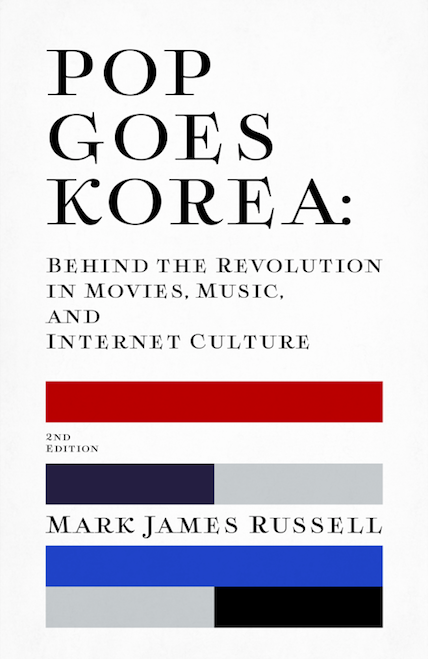
Pop Goes Korea: Behind the Revolution in Movies, Music and Internet Culture is the only English-language book to examine the whole of Korea's entertainment industry and how it became such a powerhouse over the past 15 years. With profiles of many of Korea's top stars (including Lee Byung-hun and Rain), Pop Goes Korea features chapters on movies, music, television, comic books, the Internet, and more.
What the Critics Are Saying
Wall Street Journal:
"Mr. Russell's book is the first by a non-Korean to explain the rise of Korea's entertainment industries. With lots of pictures, lists (top TV shows, most expensive movies, worst flops) and sidebar articles, the book could hardly be more approachable."
London Korea Links:
"...a lively description of the industry and infrastructure which makes the creation and enjoyment of these stars possible."
"Five stars out of five"
Korea Times:
"The book reveals not only the challenges of Korean pop culture but also triumphs and feats in entertainment and arts with poignant analysis and anecdotes to help the industry move in a better direction. "
Purchase
To buy your own copy of Pop Goes Korea, you can check out these websites: